
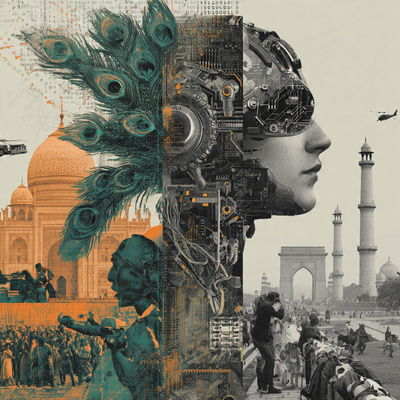

Explore the evolution of Indian technology from ancient scientific discoveries to modern innovations like AI, space missions, and Digital India initiatives shaping the future.
India has a rich legacy of innovation that stretches back thousands of years. From pioneering mathematical concepts to leading global IT services and launching sophisticated space missions, the evolution of Indian technology reflects a remarkable journey of knowledge, creativity, and resilience. Today, India stands as one of the fastest-growing technological ecosystems in the world, influencing global innovation across multiple sectors.
This journey did not happen overnight. It evolved through centuries of scientific discovery, cultural development, industrial progress, and digital transformation.
Ancient Foundations of Indian Technology
Long before the modern technological revolution, India was already making groundbreaking contributions to science and engineering. Ancient Indian scholars and thinkers laid the intellectual foundations that still influence modern science today.
One of the most notable contributors was Aryabhata, whose work in mathematics and astronomy introduced concepts such as the approximation of pi and advanced calculations related to planetary motion. The concept of zero, which later transformed global mathematics and computing, also originated in India.
Similarly, the ancient physician Sushruta is often regarded as the “Father of Surgery.” His medical text, the Sushruta Samhita, documented surgical procedures, medical instruments, and healthcare practices thousands of years ago.
India also demonstrated advanced metallurgical technology. The famous Iron Pillar of Delhi, built over 1,600 years ago, remains rust-resistant even today, showcasing the sophisticated metalworking skills of ancient Indian craftsmen.
Water management systems, urban planning in the Indus Valley Civilization, and architectural marvels such as stepwells further highlight India’s early technological brilliance.
Technological Developments in the Medieval Period
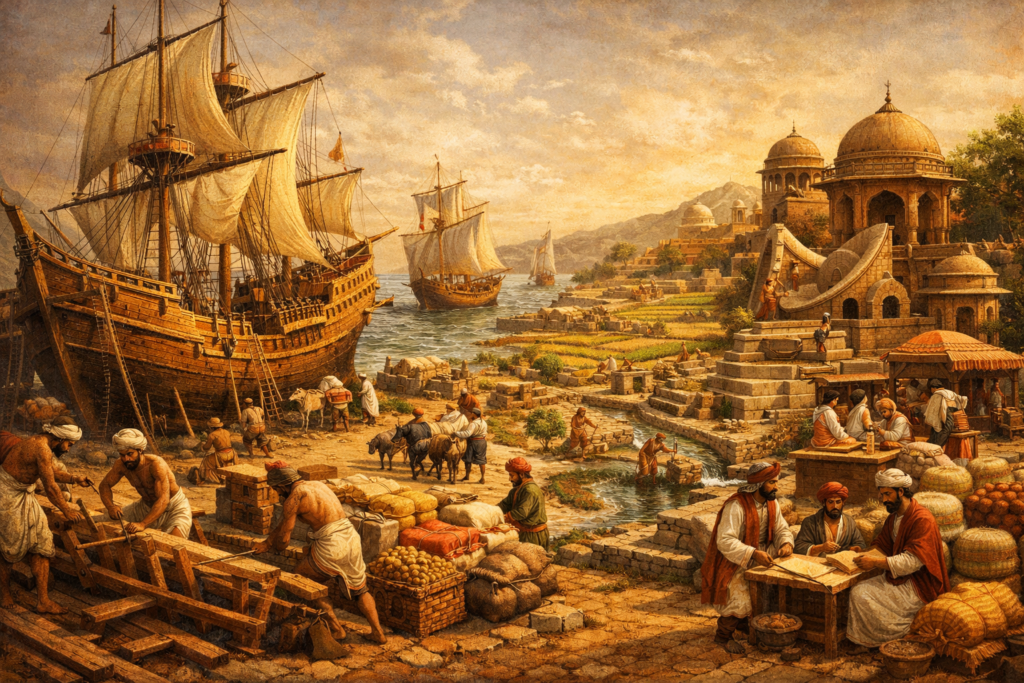
During the medieval era, India continued to innovate in fields such as architecture, agriculture, textiles, and navigation. Indian craftsmen became globally renowned for their textile production, particularly fine cotton and silk fabrics that were exported worldwide.
Shipbuilding technology also flourished during this time, allowing Indian traders to maintain strong maritime trade connections across Asia, Africa, and the Middle East. Advanced irrigation techniques helped support large agricultural communities, demonstrating practical engineering knowledge adapted to regional environments.
Astronomy and mathematics continued to progress, building upon earlier discoveries and influencing scholars in other parts of the world.
Ancient Indian Shipbuilding and Irrigation Technology: Engineering Marvels of the Past
Technological Transformation During the Colonial Era
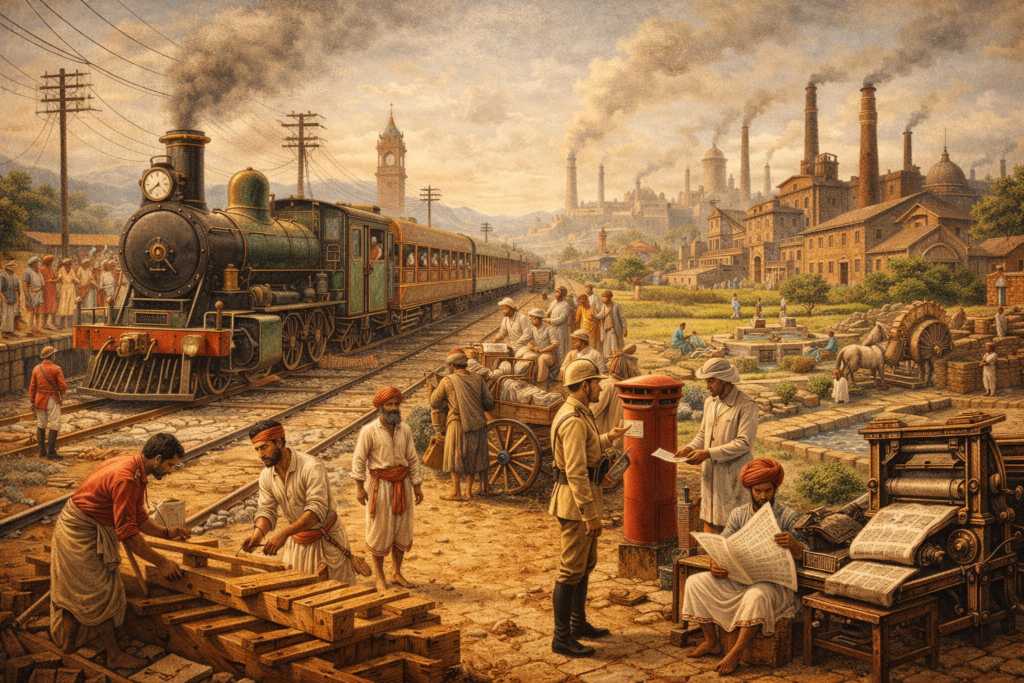
The arrival of European colonial powers in India introduced new technologies that reshaped the country’s infrastructure and industrial landscape. While these developments were primarily designed to serve colonial economic interests, they played a significant role in modernizing India’s technological framework.
One of the most transformative developments was the expansion of Indian Railways, which connected distant regions and significantly improved transportation and trade. The introduction of the telegraph and postal systems also enhanced communication across the subcontinent.
Industrial factories, printing presses, and Western education systems introduced during this period created new opportunities for technological learning and innovation. These developments laid the groundwork for India’s future industrial and technological growth after independence.
Post-Independence Scientific and Technological Growth
After gaining independence in 1947, India focused strongly on building its scientific and technological capabilities. The government established several institutions dedicated to research, innovation, and education.
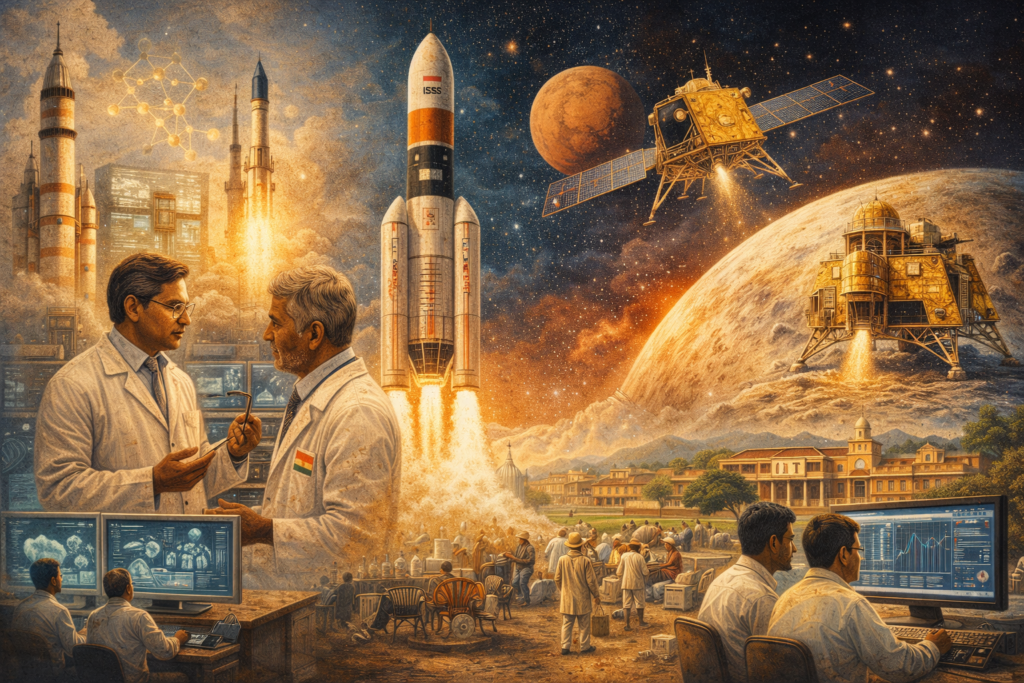
One of the most significant milestones was the creation of the Indian Space Research Organisation, which has become one of the world’s most respected space agencies. ISRO has successfully launched satellites, developed advanced space technologies, and carried out ambitious missions.
India’s achievements in space exploration include missions such as Mars Orbiter Mission, which made India the first country to reach Mars orbit on its maiden attempt. More recently, the successful landing of Chandrayaan-3 demonstrated India’s growing technological capabilities in space exploration.
India also invested heavily in nuclear technology, defense research, and higher education institutions, including IITs and research laboratories that nurtured generations of scientists and engineers.
The Rise of the IT Revolution in India
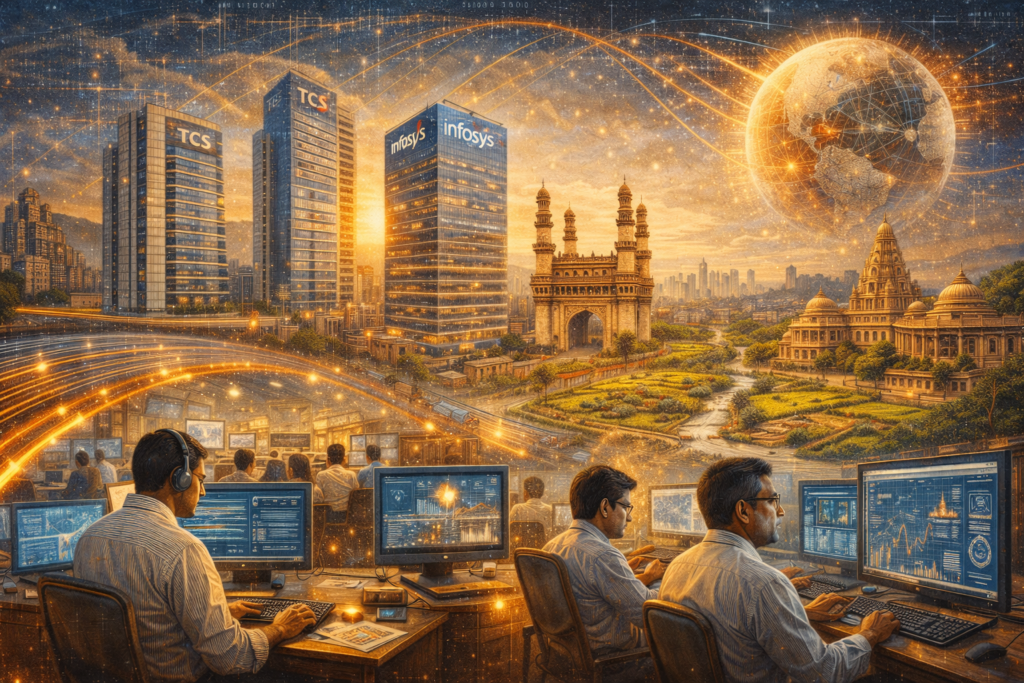
The 1990s marked a turning point in India’s technological evolution with the rapid growth of the information technology sector. Cities such as Bangalore, Hyderabad, and Pune emerged as major global technology hubs.
Indian IT companies began providing software development, consulting, and outsourcing services to businesses worldwide. Organizations such as Infosys, Tata Consultancy Services, and Wipro played a major role in establishing India as a global leader in IT services.
This technological boom created millions of jobs, boosted the economy, and positioned India as a key player in the global digital economy.
Digital Transformation and the Modern Technology Era
In recent years, India has entered a new phase of digital transformation driven by innovation, government initiatives, and a thriving startup ecosystem.
Programs like Digital India aim to improve internet connectivity, promote digital governance, and expand access to technology across the country.
One of the most revolutionary innovations in India’s fintech sector is the Unified Payments Interface (UPI), developed by the National Payments Corporation of India. UPI has transformed digital payments, allowing millions of people to transfer money instantly using smartphones.
India is also witnessing rapid growth in startups focused on artificial intelligence, biotechnology, electric vehicles, and renewable energy. Companies like Ola Electric represent the country’s commitment to sustainable and future-ready technologies.
Emerging Technologies Shaping India’s Future
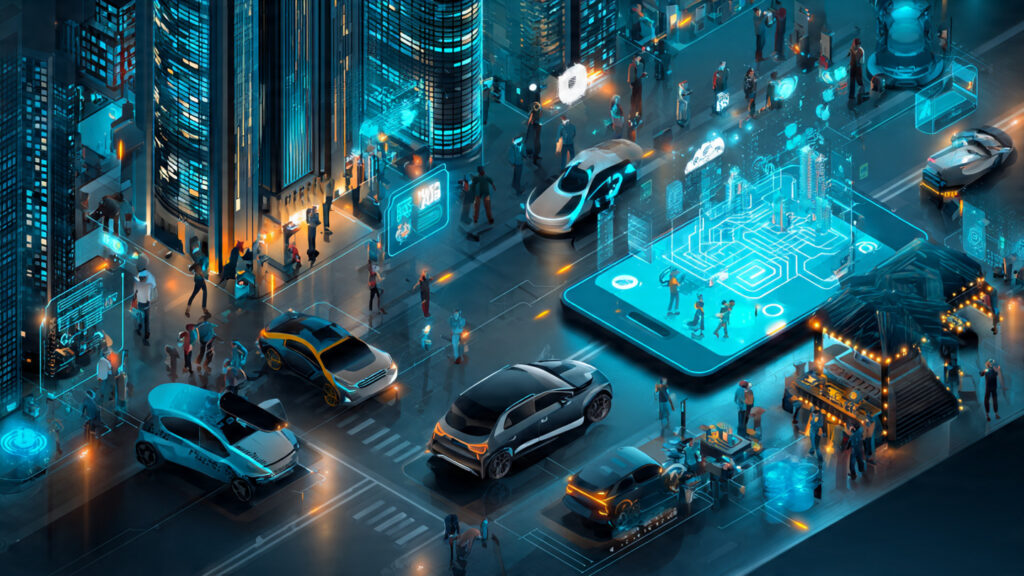
Looking ahead, several emerging technologies are expected to shape the future of India’s innovation landscape.
Artificial intelligence and machine learning are being integrated into sectors such as healthcare, agriculture, education, and finance. Indian startups and research institutions are developing AI solutions to address local challenges while contributing to global technological advancements.
India is also making significant progress in semiconductor manufacturing, green energy technologies, and advanced robotics. The country’s rapidly growing startup ecosystem continues to attract global investments and drive innovation.
Space technology remains another exciting frontier, with upcoming missions such as Gaganyaan, which aims to send Indian astronauts into space.
Challenges in India’s Technological Growth
Despite impressive progress, India still faces several challenges in achieving inclusive technological development.
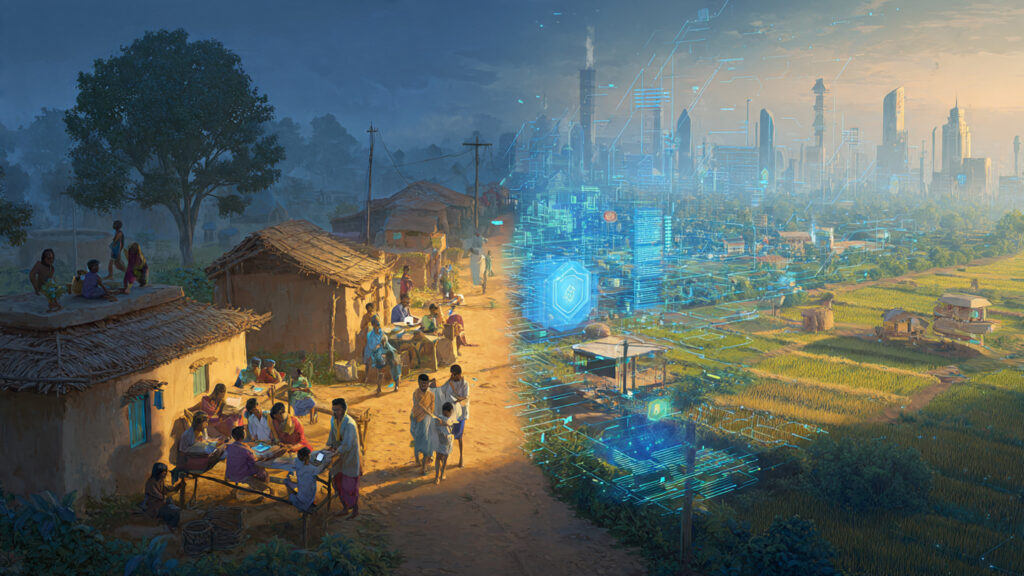
The digital divide remains a major concern, as rural and remote areas often lack access to reliable internet connectivity. Infrastructure limitations, cybersecurity risks, and the need for continuous skill development also pose challenges.
However, with strong government initiatives, growing private sector investment, and a young, tech-savvy population, India is well positioned to overcome these obstacles.
Conclusion
The evolution of Indian technology is a story of continuous innovation spanning thousands of years. From ancient mathematicians and medical pioneers to modern IT leaders and space scientists, India’s technological journey reflects a unique blend of tradition and progress.
As digital transformation accelerates and emerging technologies reshape industries, India is poised to become a global leader in innovation. By combining its rich intellectual heritage with modern scientific advancements, the country continues to shape the future of technology both at home and around the world.
Frequently Asked Questions (FAQs)
What are some ancient technological contributions from India?
Ancient India contributed several innovations, including the concept of zero, advanced surgical techniques documented by Sushruta, and astronomical discoveries by Aryabhata.
What is the role of ISRO in Indian technology?
The Indian Space Research Organisation is responsible for India’s space research and satellite missions, including major achievements like Chandrayaan-3 and Mars Orbiter Mission.
How did the IT revolution impact India?
The IT revolution transformed India into a global technology hub, with companies like Infosys and Tata Consultancy Services providing software services worldwide and creating millions of jobs.
What is the Digital India initiative?
Digital India is a government program aimed at expanding digital infrastructure, improving online services, and promoting digital literacy across India.
EXPLORE MORE
India has a long history of scientific innovation, from ancient discoveries to modern achievements like space exploration by Indian Space Research Organisation.
Digital payment system UPI in India