
In today’s fast-paced world, stress and anxiety have become common challenges affecting millions of people. Work pressure, digital overload, financial concerns, and lifestyle changes often lead to mental fatigue and emotional imbalance. While medications and therapy can help, many people are turning toward natural and holistic methods to manage their mental well-being.
One of the most effective and ancient techniques for calming the mind is Pranayama (pranayama breathing techniques), a yogic breathing practice that focuses on controlling the breath to improve physical, mental, and emotional health. Rooted in the teachings of the Yoga Sutras of Patanjali, pranayama has been practiced for thousands of years to enhance mindfulness, reduce stress, and cultivate inner peace.
In this article, we will explore powerful pranayama breathing techniques that help relieve stress and anxiety, along with their benefits and simple steps for beginners.
What is Pranayama?
Pranayama is a Sanskrit word derived from two words: “Prana”, meaning life force or vital energy, and “Ayama”, meaning control or expansion. In simple terms, pranayama refers to the practice of controlling the breath to regulate energy within the body.
According to yogic philosophy, breath is closely connected with the mind. When the breath is calm and steady, the mind becomes calm as well. When breathing is rapid or irregular, it often reflects emotional tension.
Practicing pranayama regularly can help:
- Balance the nervous system
- Reduce mental stress
- Improve concentration
- Enhance emotional stability
Many yoga masters such as B. K. S. Iyengar emphasized that breath awareness is the bridge between the body and the mind.
How Pranayama Helps Reduce Stress and Anxiety
Stress activates the sympathetic nervous system, commonly known as the “fight or flight” response. This increases heart rate, raises cortisol levels, and causes tension in the body.
Pranayama helps activate the parasympathetic nervous system, which promotes relaxation and recovery.
Regular breathing exercises can:
- Lower cortisol (stress hormone)
- Slow the heart rate
- Increase oxygen supply to the brain
- Improve emotional regulation
- Reduce symptoms of anxiety and panic
Research supported by organizations like the National Institutes of Health shows that controlled breathing practices can significantly improve mental well-being and reduce anxiety symptoms.
Best Pranayama Breathing Techniques for Stress and Anxiety
Below are some of the most effective pranayama techniques that beginners can practice safely.
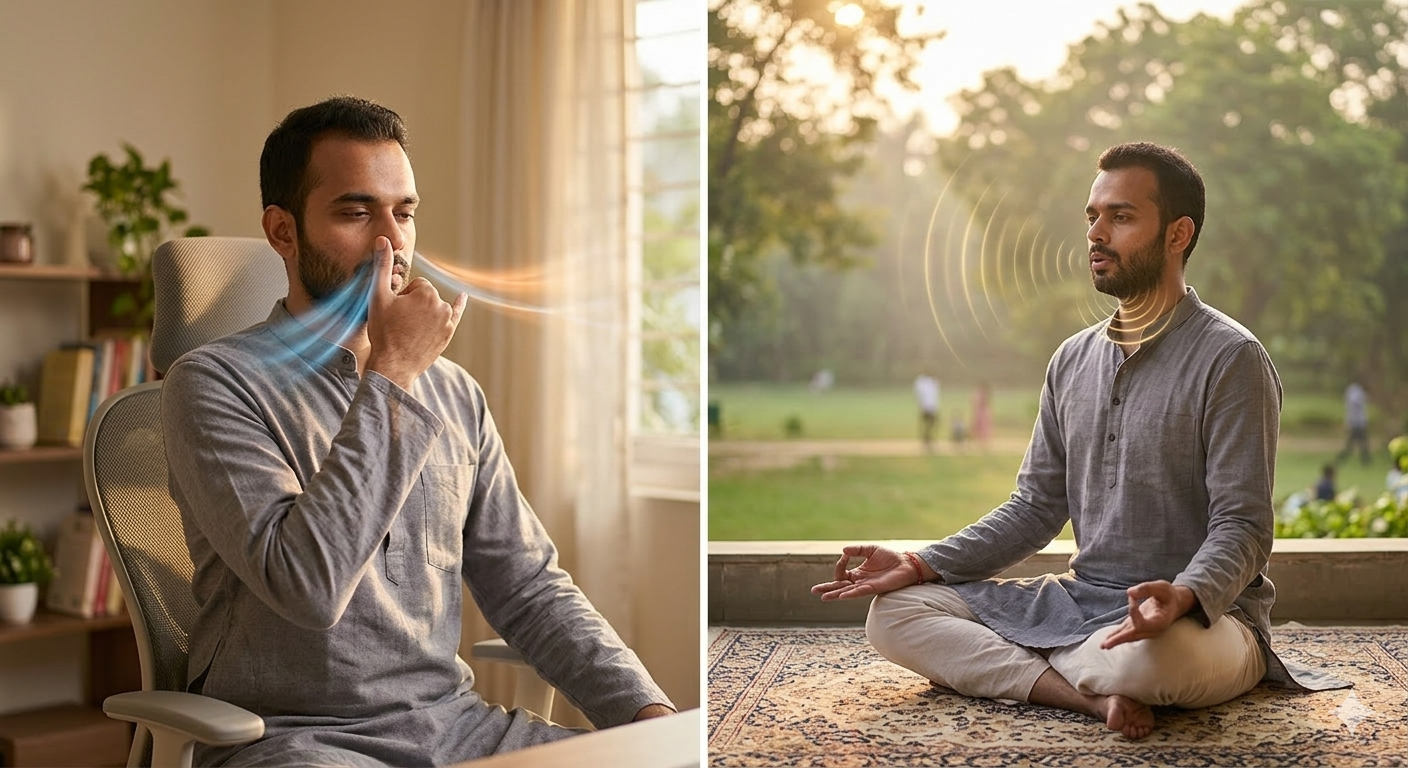
1. Anulom Vilom (Alternate Nostril Breathing)
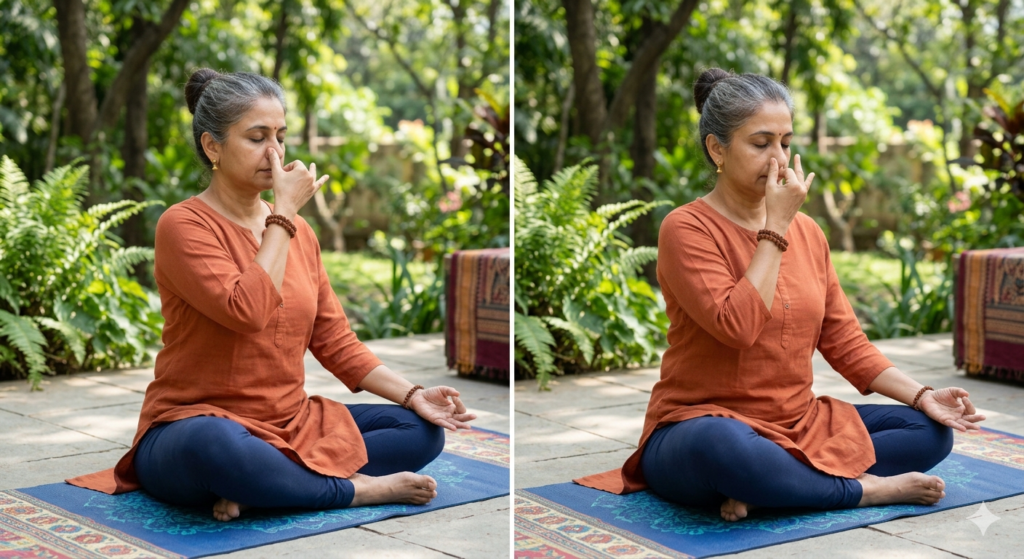
Anulom Vilom is one of the most popular pranayama techniques for calming the nervous system and balancing energy channels in the body.
How to Practice
- Sit comfortably with your spine straight.
- Close your right nostril with your thumb.
- Inhale slowly through the left nostril.
- Close the left nostril and open the right nostril.
- Exhale through the right nostril.
- Inhale through the right nostril and repeat the cycle.
Practice for 5–10 minutes daily.
Benefits
- Reduces anxiety and mental stress
- Improves oxygen flow to the brain
- Enhances focus and clarity
- Balances the nervous system
2. Bhramari Pranayama (Bee Breathing)
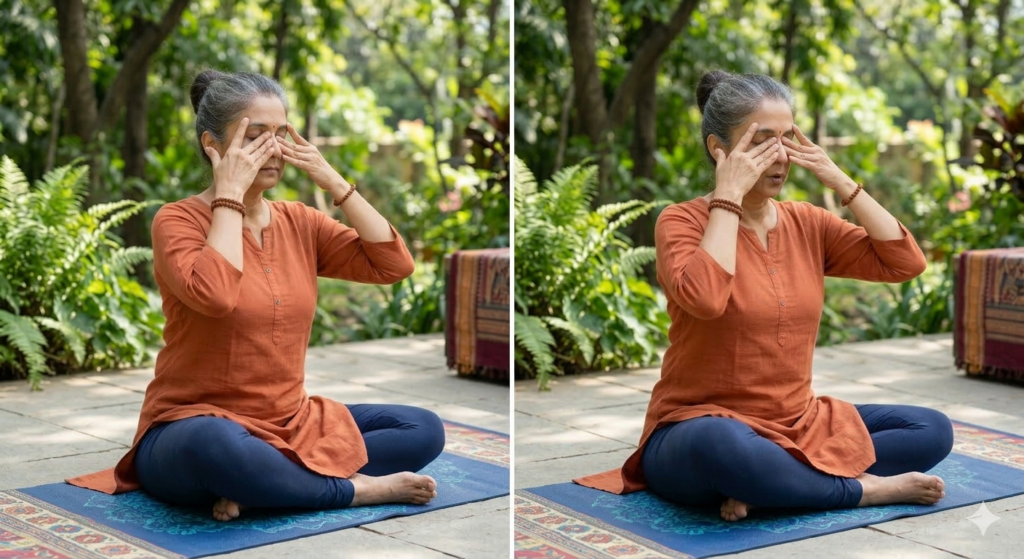
Bhramari pranayama involves making a gentle humming sound while exhaling, which produces vibrations that calm the mind.
How to Practice
- Sit comfortably in a quiet place.
- Close your eyes and relax your face.
- Place your fingers gently on your ears.
- Take a deep breath through the nose.
- Exhale slowly while making a humming sound like a bee.
Repeat this 5–7 times.
Benefits
- Instantly reduces stress and anger
- Helps relieve anxiety and frustration
- Improves sleep quality
- Promotes mental relaxation
This technique is especially useful during moments of panic or emotional overwhelm.
3. Kapalbhati Pranayama
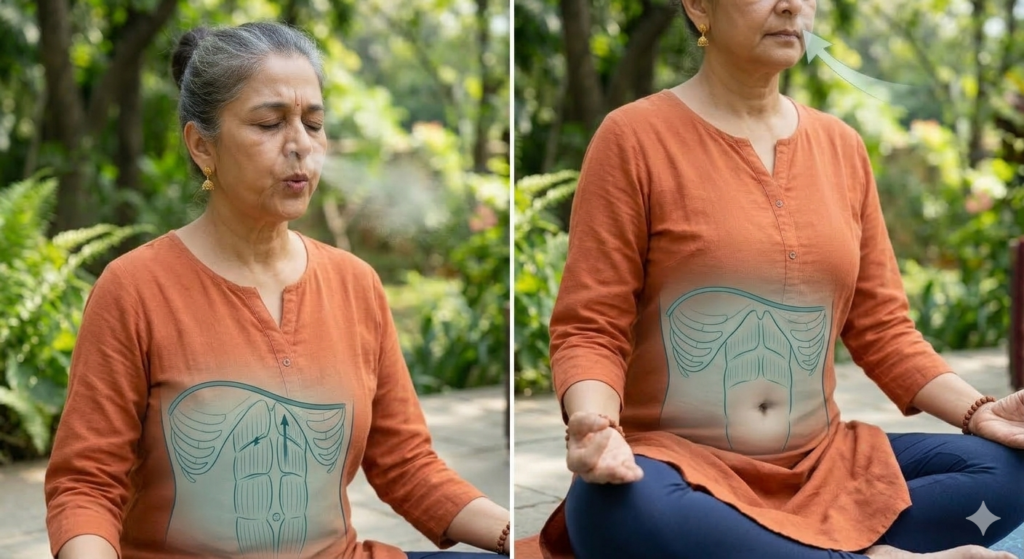
Kapalbhati is a dynamic breathing exercise that involves rapid and forceful exhalations.
Unlike other pranayama techniques, Kapalbhati focuses on active exhalation and passive inhalation.
How to Practice
- Sit comfortably with a straight spine.
- Take a deep breath.
- Exhale forcefully by contracting your abdominal muscles.
- Allow inhalation to happen naturally.
- Continue this rhythm for 20–30 breaths.
Benefits
- Energizes the body and mind
- Improves lung capacity
- Detoxifies the respiratory system
- Enhances concentration
However, beginners should practice it slowly and avoid excessive force.
4. Nadi Shodhana (Energy Channel Purification)
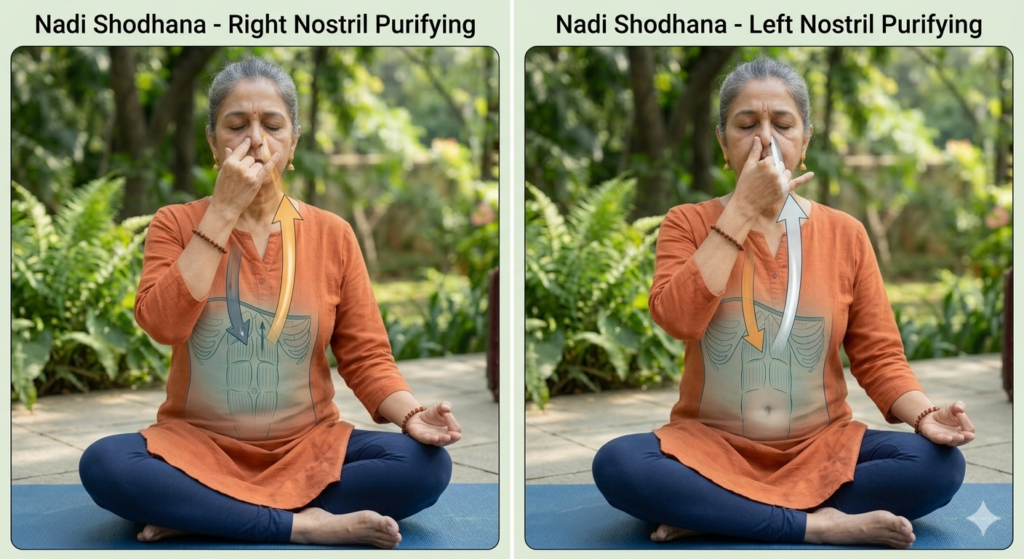
Nadi Shodhana is another form of alternate nostril breathing that focuses on cleansing the body’s energy channels (nadis).
It is widely recommended for mental clarity and emotional balance.
How to Practice
- Sit in a comfortable meditation posture.
- Use your thumb to close the right nostril.
- Inhale slowly through the left nostril.
- Close the left nostril and exhale through the right.
- Continue alternating nostrils.
Practice for 5–10 minutes daily.
Benefits
- Reduces anxiety and restlessness
- Improves concentration and focus
- Balances the left and right hemispheres of the brain
- Promotes emotional stability
Simple Daily Pranayama Routine for Beginners
If you are new to pranayama, you can start with this 10–15 minute routine.
Morning Routine
- Deep breathing – 3 minutes
- Anulom Vilom – 5 minutes
- Bhramari – 3 minutes
- Short meditation – 5 minutes
Practicing this routine daily can gradually improve mental clarity, emotional balance, and overall well-being.
Tips for Practicing Pranayama Safely
To get the maximum benefits, follow these guidelines:
1. Practice on an Empty Stomach
Morning is the best time to practice pranayama.
2. Sit in a Comfortable Posture
You can sit cross-legged on the floor or on a chair with a straight back.
3. Focus on Slow and Natural Breathing
Never force the breath or strain your lungs.
4. Start Slowly
Beginners should start with 5–10 minutes daily and gradually increase the duration.
Common Mistakes to Avoid
Many beginners make small mistakes that reduce the benefits of pranayama.
Avoid these:
- Breathing too fast
- Practicing immediately after meals
- Forcing inhalation or exhalation
- Sitting with poor posture
- Practicing in a noisy or stressful environment
Correct technique ensures maximum relaxation and effectiveness.
Who Should Be Careful While Practicing Pranayama
Although pranayama is generally safe, some people should consult a professional before practicing.
This includes:
- Pregnant women
- People with high blood pressure
- Individuals with respiratory disorders
- People recovering from surgery
If you have any medical condition, it is best to practice under the guidance of a qualified yoga instructor.
Conclusion
Pranayama is a powerful yet simple practice that can significantly improve mental well-being. By learning to control the breath, we can calm the mind, reduce stress hormones, and restore emotional balance.
Just 10–15 minutes of daily pranayama practice can help you feel more relaxed, focused, and energized throughout the day. Techniques like Anulom Vilom, Bhramari, Kapalbhati, and Nadi Shodhana are especially effective in reducing anxiety and promoting inner peace.
Incorporating pranayama into your daily routine can be a transformative step toward a healthier, calmer, and more mindful life.
Start today, breathe deeply, and allow the power of your breath to bring balance and harmony to your mind and body.
Frequently Asked Questions (FAQs)
1. What is pranayama and how does it help reduce stress?
Pranayama is a yogic breathing technique that focuses on controlling and regulating the breath. The word comes from the Sanskrit terms prana (life force) and ayama (control or expansion). By slowing and deepening the breath, pranayama activates the body’s relaxation response, which reduces stress hormones and calms the nervous system. Regular practice can help improve mental clarity, emotional balance, and overall well-being.
2. Which pranayama is best for anxiety?
Several pranayama techniques are effective for anxiety relief, but the most recommended ones include:
- Anulom Vilom (Alternate Nostril Breathing) – balances the nervous system
- Bhramari Pranayama (Bee Breathing) – calms the mind and reduces anger
- Nadi Shodhana – improves focus and emotional balance
These techniques slow down breathing patterns and help relax the brain.
3. How long should I practice pranayama daily?
Beginners can start with 10–15 minutes of pranayama daily. As your body becomes comfortable with the practice, you can gradually increase the duration to 20–30 minutes per day. Consistency is more important than duration, so practicing regularly will provide better results.
4. Can pranayama help with panic attacks?
Yes, pranayama can help manage panic attacks by regulating breathing and calming the nervous system. Techniques like Bhramari and deep diaphragmatic breathing can slow down rapid breathing, lower heart rate, and reduce the intensity of panic symptoms.
5. When is the best time to practice pranayama?
The best time to practice pranayama is early in the morning on an empty stomach. Morning practice helps improve focus, energy, and mental clarity throughout the day. However, it can also be practiced in the evening to reduce stress and promote relaxation.
6. Can beginners practice pranayama safely?
Yes, beginners can safely practice pranayama if they start slowly and follow proper techniques. It is important to:
- Practice in a calm environment
- Sit in a comfortable posture
- Avoid forcing the breath
- Begin with simple techniques like Anulom Vilom
If you have any medical condition, consulting a yoga instructor or healthcare professional is recommended.
7. Does pranayama improve sleep?
Yes, pranayama can significantly improve sleep quality. Breathing techniques like Bhramari and Nadi Shodhana relax the mind, reduce stress, and prepare the body for restful sleep. Practicing these techniques before bedtime can help reduce insomnia and promote deep relaxation.
8. Is pranayama scientifically proven to reduce anxiety?
Yes, several studies supported by organizations like the National Institutes of Health have shown that controlled breathing exercises can lower stress levels, reduce anxiety symptoms, and improve mental health by regulating the nervous system.