
15 Unique Traditions That Exist Only in India: Cultural Practices You Won’t Find Anywhere Else
Discover 15 unique traditions that exist only in India. Explore fascinating cultural practices, rituals, and festivals that showcase India’s rich heritage and diversity.
15 Unique Traditions That Exist Only in India
India is not just a country—it is a living museum of traditions, cultures, rituals, and ancient beliefs. With over 5,000 years of history, every region in India holds customs that surprise, inspire, and sometimes even astonish the world.
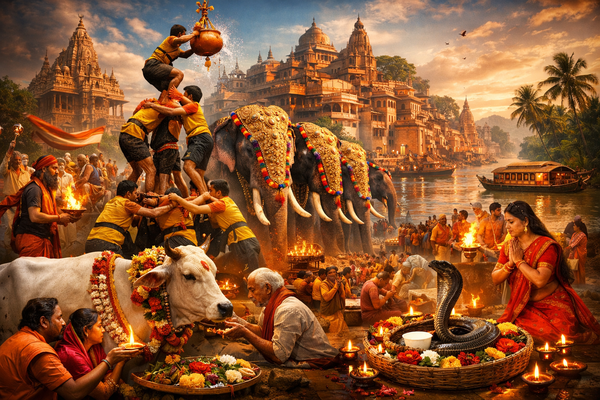
From festivals where people worship animals to rituals where thousands gather to form human pyramids, India’s traditions reflect deep spirituality, community bonding, and cultural pride.
Some of these customs may appear unusual to outsiders, but they carry centuries of history, belief, and emotional connection.
Let’s explore 15 unique traditions that exist only in India and understand the fascinating stories behind them.
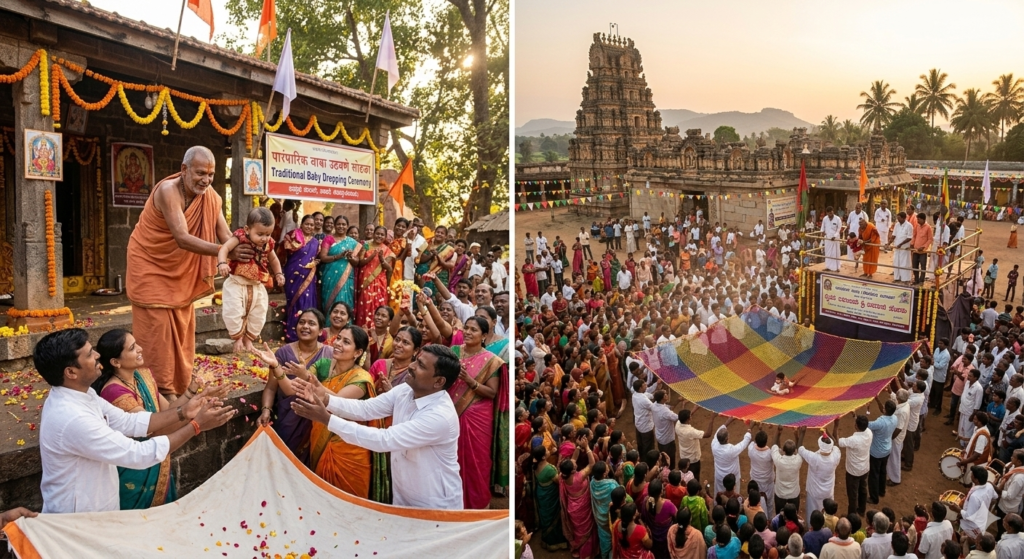
1. Baby Dropping Ritual – Maharashtra & Karnataka
In this ritual, infants are dropped from a height of about 30–50 feet from a temple or mosque roof, while a group of people below hold a cloth to catch them safely.
One of the most surprising traditions practiced in parts of Maharashtra and Karnataka is the Baby Dropping Ritual.
Why is this tradition followed?
The ritual is believed to bring:
- Good health to the child
- Protection from evil spirits
- A prosperous future
Though controversial and monitored today, locals believe it symbolizes trust in divine protection.
2. Nag Panchami – Worship of Snakes
India is perhaps the only country where snakes are worshipped as divine beings.
During Nag Panchami, devotees pray to cobras and snake deities.
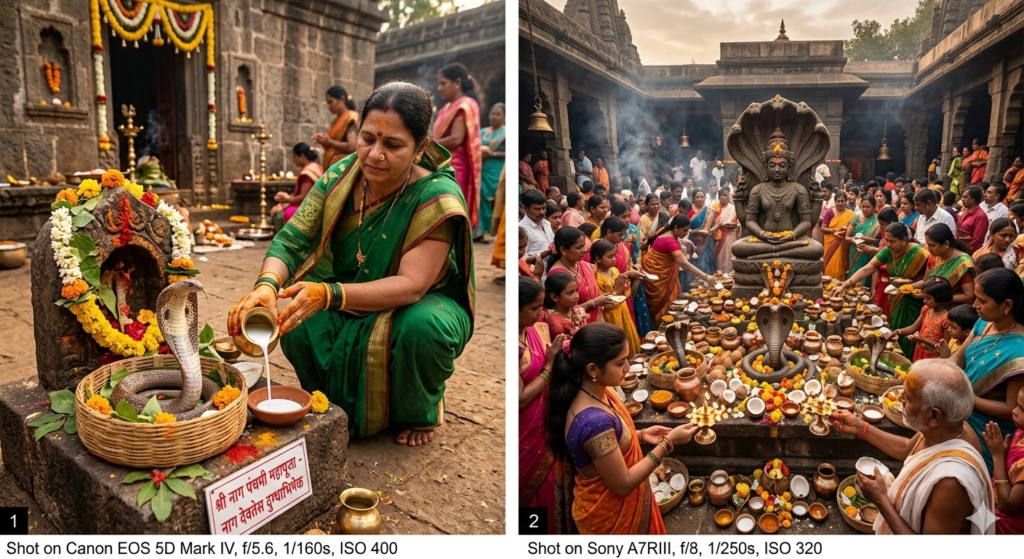
Rituals include:
- Offering milk to snake idols
- Drawing snake images outside homes
- Visiting snake temples
The tradition originates from ancient beliefs that snakes are associated with Lord Shiva and Lord Vishnu.
It reflects India’s deep respect for nature and wildlife.
3. Thaipusam Body Piercing – Tamil Nadu
During the Thaipusam festival, devotees of Lord Murugan perform intense acts of devotion.
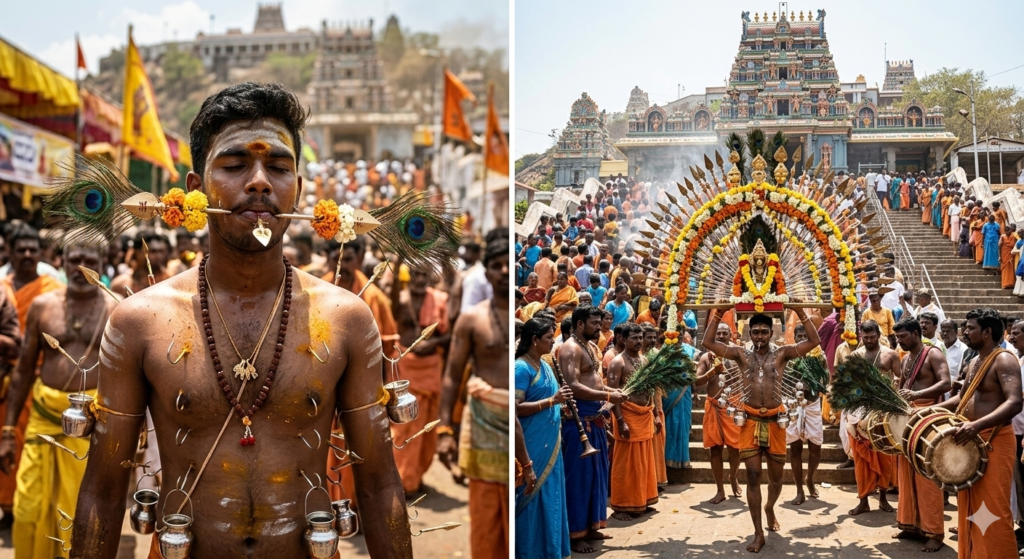
Many devotees pierce their:
- Cheeks
- Tongue
- Skin
They carry a heavy structure called Kavadi while walking long distances.
Why do devotees do this?
It is believed to:
- Fulfill vows
- Show gratitude to the deity
- Seek blessings and spiritual purification
Despite the extreme appearance, participants often enter a trance-like spiritual state.
4. Govardhan Puja Cow Dung Ritual – North India
In certain regions of Uttar Pradesh and Madhya Pradesh, people celebrate Govardhan Puja in a unique way.
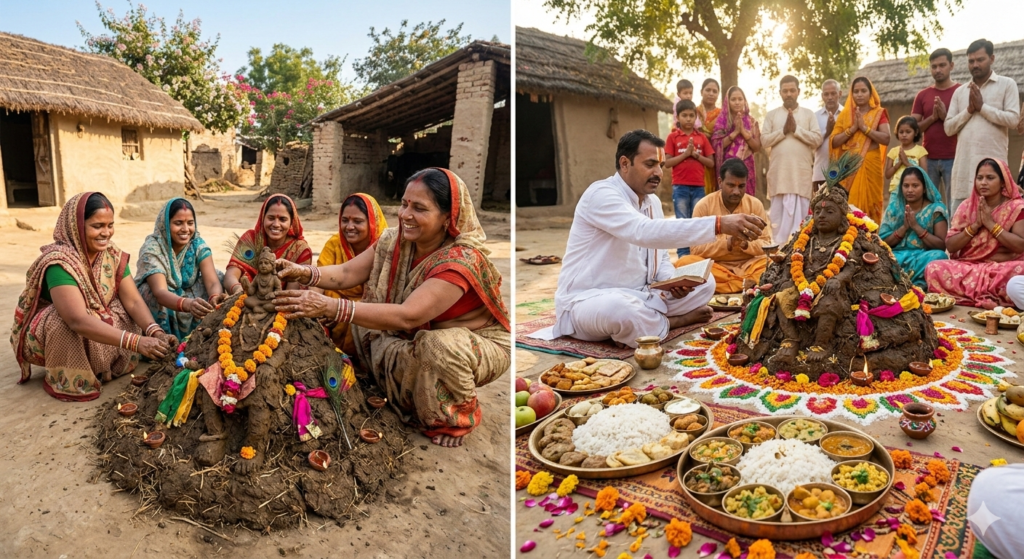
Devotees create symbolic structures using cow dung, representing Govardhan Hill, which was lifted by Lord Krishna.
Some people even roll over the cow dung as part of the ritual.
Cultural significance
In Hindu tradition, the cow is considered sacred and cow dung is believed to possess purifying and medicinal properties.
5. Theemithi – Fire Walking Festival
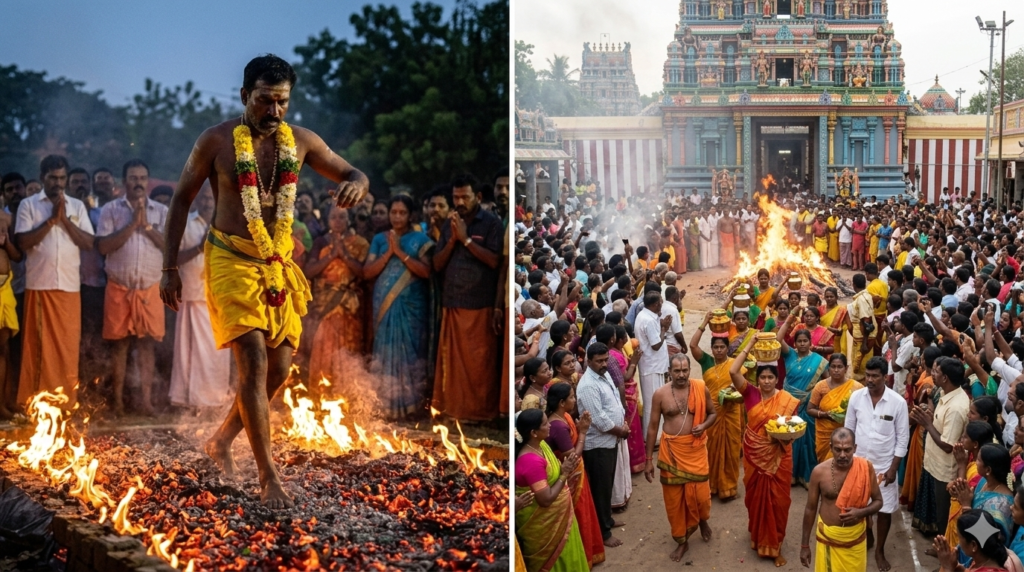
Theemithi is a spectacular fire-walking ritual celebrated mainly in Tamil Nadu.
Devotees walk barefoot over burning coal to honor Draupadi from the Mahabharata.
Why do people walk on fire?
The ritual symbolizes:
- Courage
- Faith
- Devotion to the goddess
Many believe that those with pure faith feel no pain.
6. Dahi Handi – Human Pyramid Festival
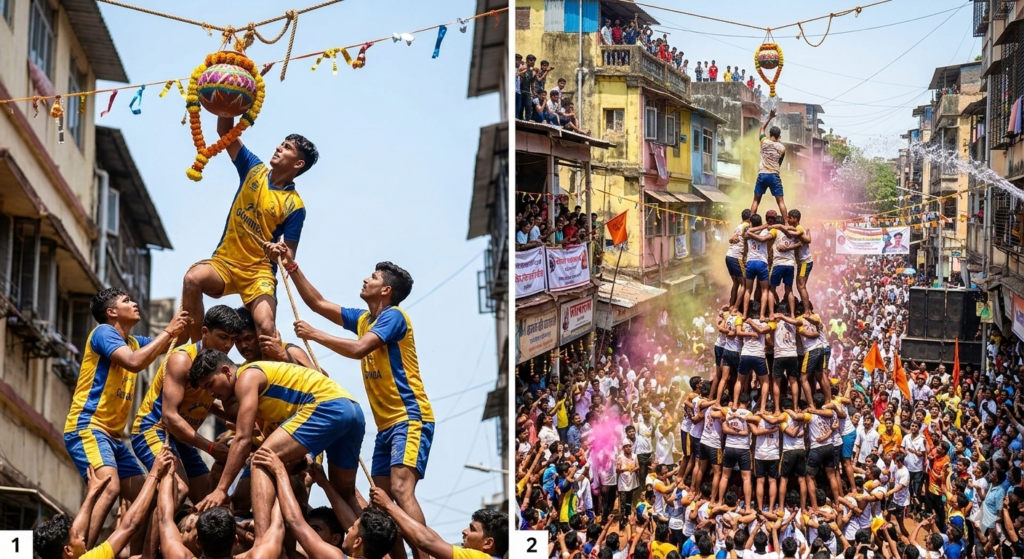
During Janmashtami, young men form massive human pyramids to break a clay pot filled with yogurt, butter, or money.
This tradition recreates the childhood stories of Lord Krishna, who loved stealing butter.
Highlights of the festival
- Teams compete for prize money
- Huge crowds gather in cities like Mumbai and Pune
- It represents teamwork and devotion
7. Theyyam Ritual Dance – Kerala
Theyyam is one of the oldest ritual art forms practiced in Kerala.
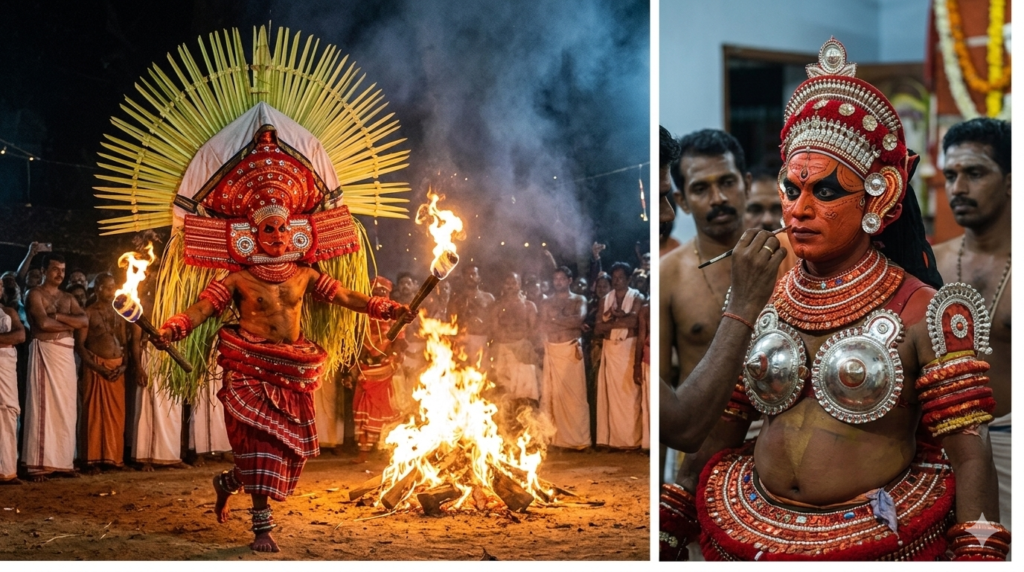
Performers wear:
- Massive headgear
- Elaborate face paint
- Fire-lit costumes
During the ritual, locals believe the performer becomes the deity.
Villagers seek blessings, guidance, and even solutions to personal problems.
8. Living Root Bridges – Meghalaya Tradition
In Meghalaya, the Khasi tribe practices an incredible eco-tradition.
They guide the roots of rubber trees across rivers to create natural bridges.
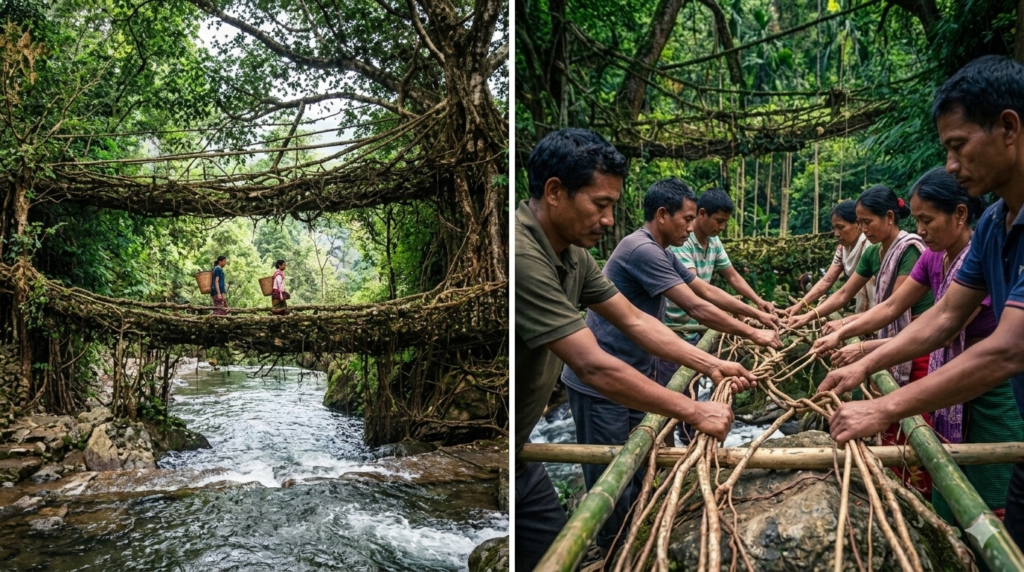
What makes them special?
- They grow stronger over time
- Some are over 500 years old
- They represent sustainable engineering
These bridges are a beautiful example of traditional ecological knowledge.
9. Camel Festival – Rajasthan
The Pushkar Camel Festival in Rajasthan is one of the world’s most colorful animal fairs.
Thousands of camels are:
- Decorated
- Paraded
- Even made to dance
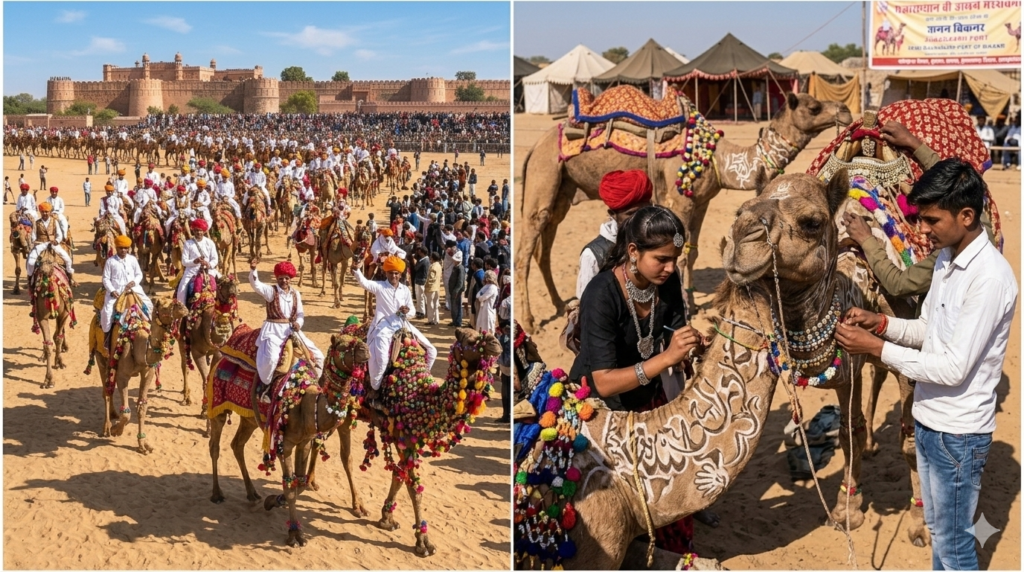
The festival also includes:
- Folk music
- Cultural competitions
- Camel beauty contests
It attracts tourists from around the world.
10. Karni Mata Temple – Worship of Rats
The Karni Mata Temple in Rajasthan is famously known as the Temple of Rats.
Over 25,000 rats live inside the temple, and devotees consider them sacred.
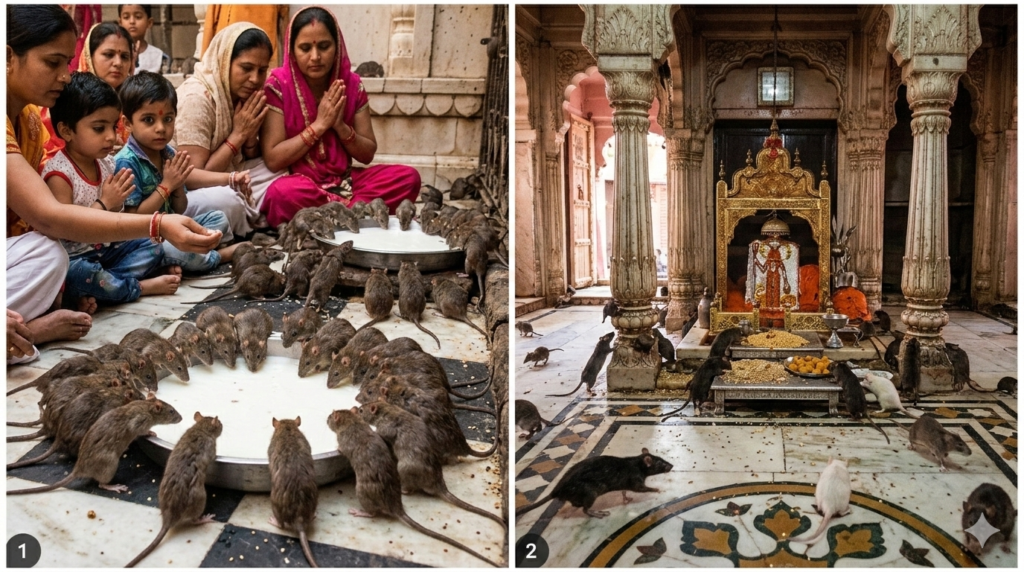
Unique belief
Seeing a white rat is believed to bring good luck and blessings.
Visitors even eat food that rats have touched as a sign of divine blessing.
11. Hornbill Festival – Nagaland
The Hornbill Festival is known as the Festival of Festivals in Nagaland.
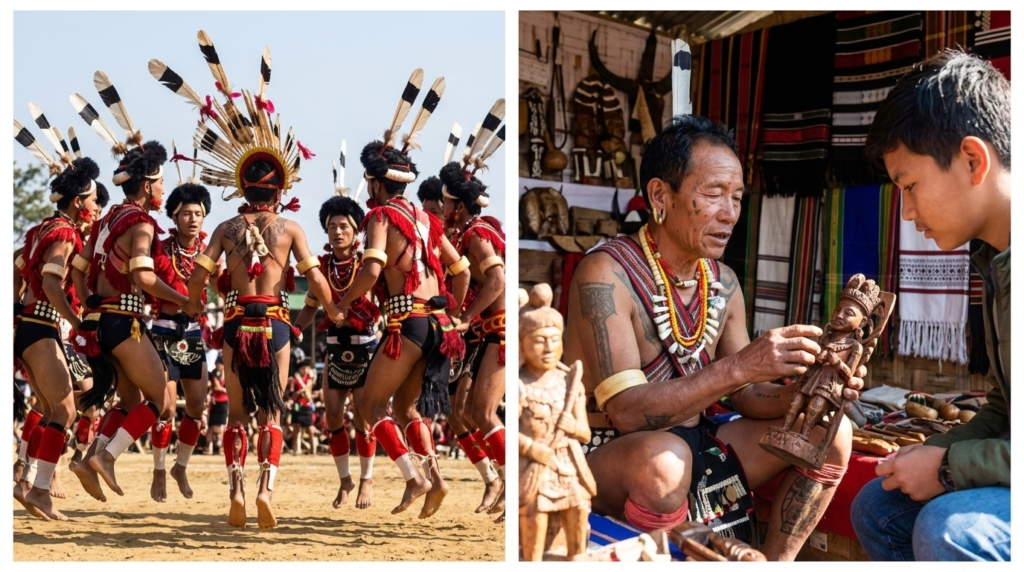
It showcases the culture of 16 Naga tribes.
Key attractions
- Tribal dances
- Traditional food
- Indigenous music
- Handicrafts
It helps preserve the rich heritage of Northeast India.
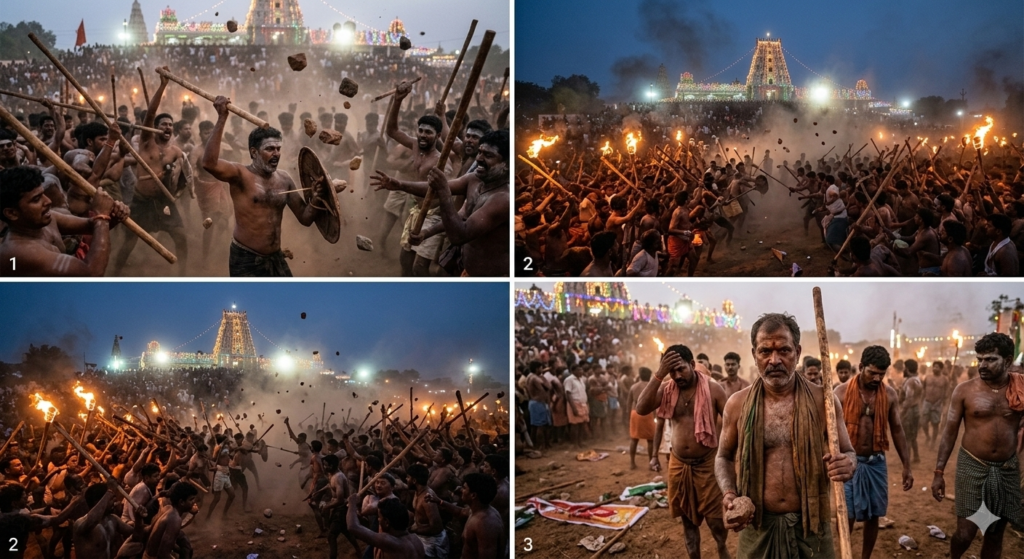
12. Banni Festival Stone Fight – Andhra Pradesh
In Devaragattu village of Andhra Pradesh, a dramatic tradition takes place during the Banni Festival.
Devotees throw stones at each other in a symbolic battle.
Cultural belief
The ritual represents a mythological battle between good and evil.
Despite injuries, participants consider it a sacred duty.
13. Aadi Perukku River Worship – Tamil Nadu
This beautiful festival celebrates water and rivers.
People gather along riverbanks—especially the Cauvery River—to offer prayers.
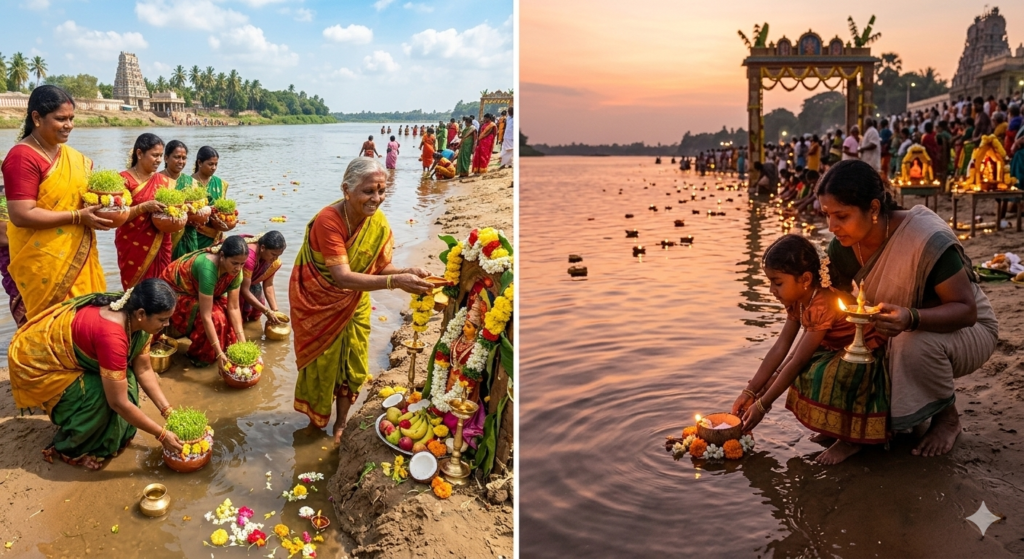
Women float lamps and flowers in the water to seek:
- Prosperity
- Agricultural abundance
- Family well-being
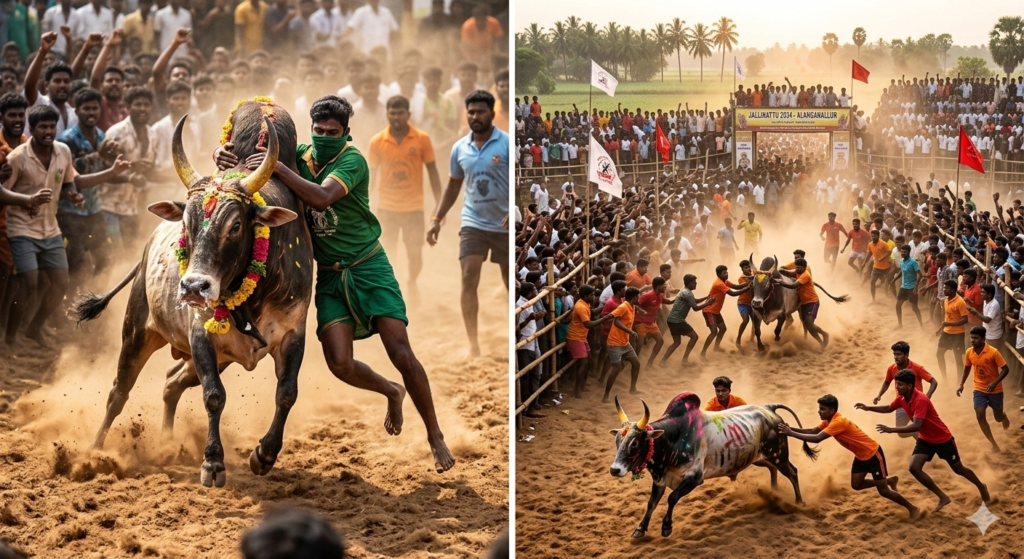
14. Jallikattu – Traditional Bull Taming
Jallikattu is an ancient bull-taming sport celebrated during Pongal in Tamil Nadu.
Participants attempt to hold onto a running bull’s hump and stop it.
Cultural importance
The tradition:
- Honors native cattle breeds
- Celebrates bravery
- Strengthens rural identity
It has also sparked debates about animal rights and cultural heritage.
15. Onam Snake Boat Race – Kerala
During Onam, Kerala hosts spectacular Snake Boat Races, known as Vallam Kali.
Long boats carrying over 100 rowers race through backwaters in perfect rhythm.
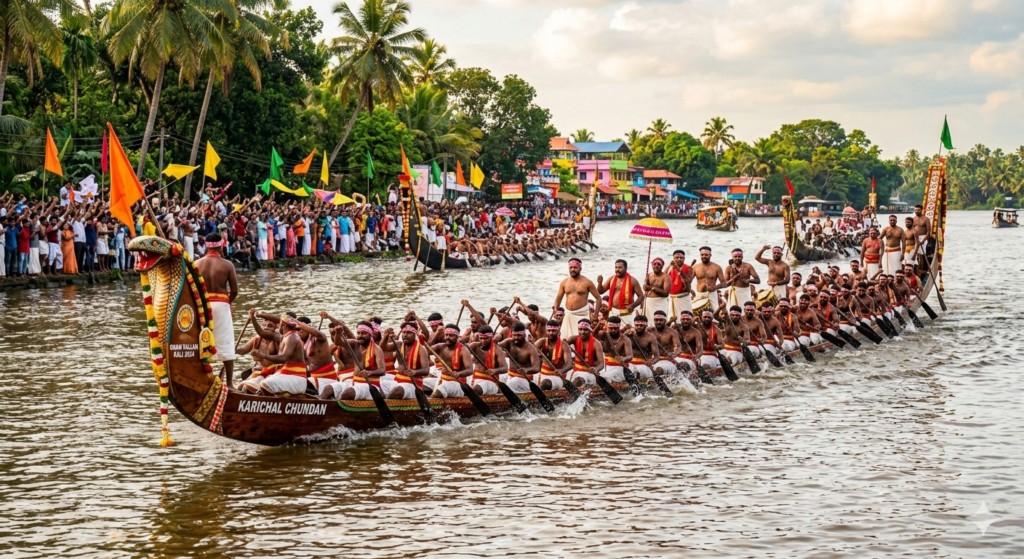
What makes it special?
- Rowers sing traditional songs
- Thousands gather to watch
- It symbolizes unity and teamwork
Why India’s Traditions Are So Unique
India’s traditions are deeply rooted in:
- Spiritual beliefs
- Ancient mythology
- Community bonding
- Nature worship
Unlike many modern cultures, Indian traditions blend religion, environment, and social life into a vibrant cultural identity.
You may also enjoy reading:
- Indian Festivals That Attract Tourists From Around the World
- Ancient Temples in India With Mysterious Stories
- Incredible Cultural Heritage of India
FAQ Section
What makes Indian traditions unique?
Indian traditions are unique because they combine religion, history, mythology, and community practices that have been preserved for thousands of years.
Are these traditions still practiced today?
Yes, many of these traditions are still actively practiced across India, although some are now regulated for safety reasons.
Why do some Indian rituals seem unusual?
Many rituals originate from ancient spiritual beliefs and symbolic practices that carry deep cultural meaning.
Which Indian festival is most famous worldwide?
Festivals like Diwali, Holi, and the Pushkar Camel Fair attract millions of international tourists every year.
Final Thoughts
India’s traditions are not just rituals—they are stories of faith, resilience, and cultural continuity.
They reveal how ancient beliefs continue to shape modern life.
Whether it’s walking on fire, building bridges from tree roots, or celebrating festivals with thousands of people, India remains a land where tradition and spirituality live side by side.cinating facts that history books often overlook.